
Integrated Building Automation System
engineered as infrastructure.
A structured system that defines how a building behaves — designed for the people who use and operate the space. Not a collection of connected devices.
Defining the standard
The term “smart home” is widely used. In our work, it means something more structured.
This is a Building Automation System (BAS) — engineered with defined boundaries, responsibilities and verifiable outcomes.
It is not remote control of isolated features.
It is not device-level connectivity.
It is system architecture.
Engineered, documented and accountable.
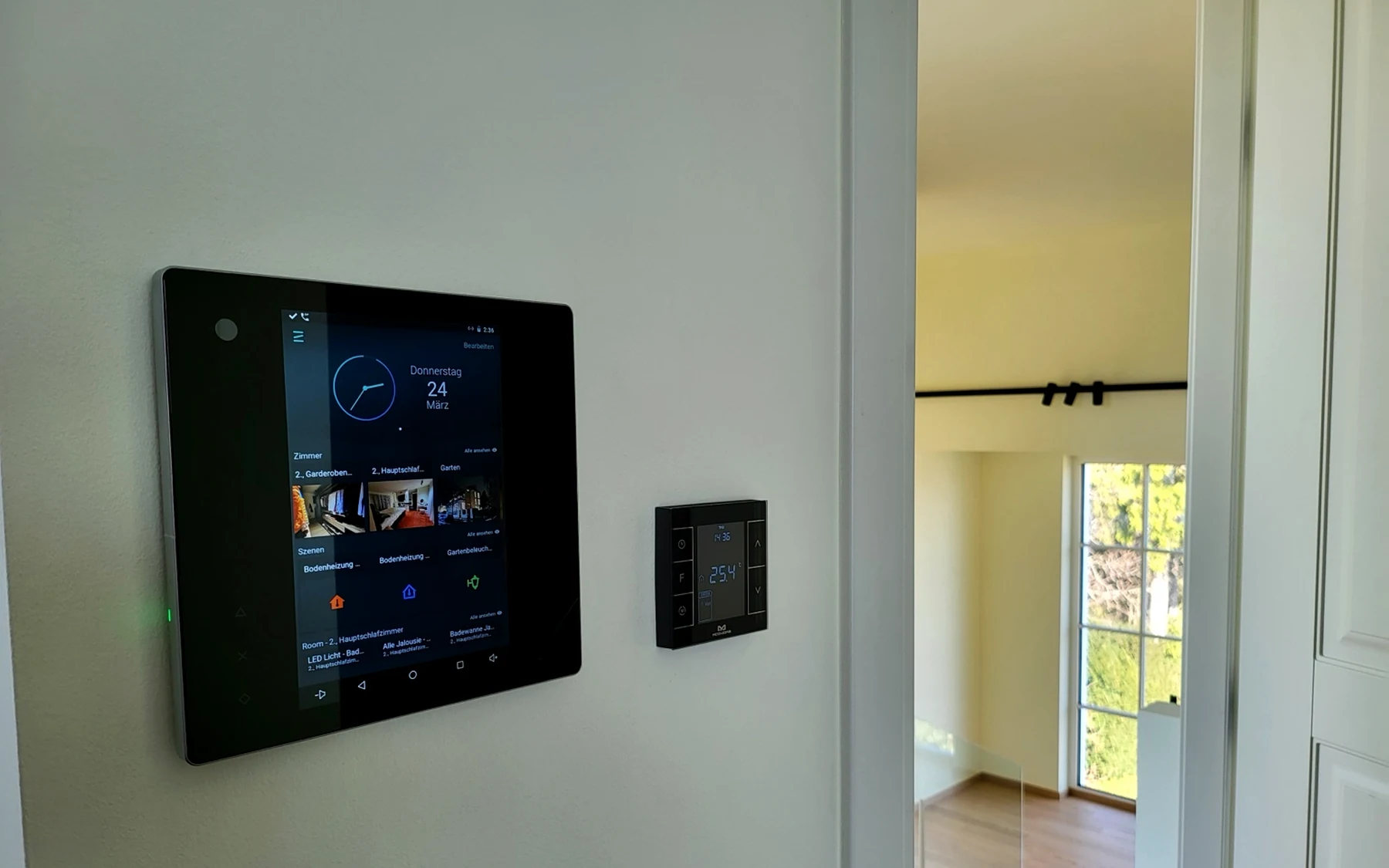
Operational support, not replacement
A building functions without a system layer. The system refines how it functions.
It enhances safety, efficiency and practicality — without replacing primary control.
Just as modern vehicles integrate advanced assistance systems while preserving driver responsibility, a properly engineered system improves operation without taking over.
- Core access remains available
- Manual override remains intact
- The system must never become an obstacle
The objective is assistance — to strengthen everyday operation, safety and clarity.
Designed around people
Industrial discipline. Architectural thinking. Human focus.
The Integrated BAS combines deterministic engineering principles with architecture-driven design.
System behavior is structured using clear state logic. System interaction follows spatial flow and daily routines.
Technology follows architecture.
Architecture serves the people who use the space.
The system is structured accordingly.
Architectural collaboration
The system architecture is developed in parallel with building design — not layered onto it later.
From early project stages, structure is aligned with architectural intent, spatial organization, mechanical and electrical planning, and circulation logic.
The system is not an afterthought. It is part of the project logic.
Collaboration with architects and engineering disciplines ensures that the Building Automation System becomes part of the building concept itself.
Behavioral architecture
Building Automation System layer
Buildings operate in states. The system defines and verifies those states.
Transitions are engineered, not improvised.
Arrival. Departure. Night. Secure. Occupied.
As a structured automation layer, it defines transitions between these states using deterministic logic.
- Condition-based sequences
- Verified transitions
- Safe-state and fallback logic
- Background routines operating without friction
The result is a measurable reduction of cognitive load in daily routines.
*Example of methodology — not a fixed set of features.
Operational benefits
*Representative examples — not an exhaustive list.
Reduced cognitive load
Building state is verified automatically — reducing repetitive checks of doors, gates and security status.
Time efficiency
Structured arrival and departure modes eliminate redundant actions and manual sequencing.
Security assurance
Lock status, window state and alarm transitions are verified — not assumed.
Energy discipline
Environmental systems respond to defined modes and occupancy states — not memory or habit.
Benefits extend beyond these examples and depend on project-specific configuration.
Integrated domains — project defined
The system is defined by the project — not by a catalog.
The Integrated Building Automation System can coordinate:
Custom integrations and engineered adaptations are part of the methodology. Scope is determined by architectural intent and operational needs.
*Domains shown are representative. Final scope is project-defined.
Engineering contexts
The same methodology applies to new developments and existing buildings. Only constraints differ — the objective remains structured behavior and clear operation.
New development
System layers, wiring strategy and interface structure are defined during architectural planning.
Existing structure
System architecture is adapted to existing spatial and technical constraints, introducing structured behavior without unnecessary structural disruption.
Phased implementation
Each phase is production-grade. No temporary system layers.
- Phase 1 — Structural and infrastructure readiness
- Phase 2 — Core behavioral deployment
- Phase 3 — Optimization and expansion
Every phase maintains system integrity while allowing controlled growth.
Applied methodology — Arrival workflow
Access and arrival sequence engineered under mechanical and regulatory constraints.
- Manual gate activation
- Manual garage door operation
- Manual mechanical parking lift control
- Continuous key-hold requirement for compliance
- 6–9 minutes per arrival
- Daily repetitive friction
- User-specific arrival mode
- Parking platform positioned in advance
- Gate and garage synchronized
- Safety conditions verified automatically
- Sub-minute structured entry
- Full regulatory compliance maintained
The system did not remove constraints. It restructured the process.
*Illustrative clip. Scope and sequence vary by project.
Closing principle
An Integrated Building Automation System supports. It does not dominate.
It exists to improve safety, practicality, efficiency and peace of mind — while preserving control, clarity and architectural intent. Control always remains with the user.